The government has ruled out any change to presidential term limits, saying there is no policy proposal before it to reopen the question of how long a president may serve, according to a written statement from Chief Government Spokesperson Elvis Nkandu.
In the statement, issued on Friday 20 November, Nkandu — who is also Minister of Information and Media — said the renewed debate had been started by individual members of Parliament, youth groups and other stakeholders, and not by the government. He said views advanced by individuals or interest groups should not be mistaken for official government policy. His statement sought to draw a clear line between that public discussion and the government's own position.
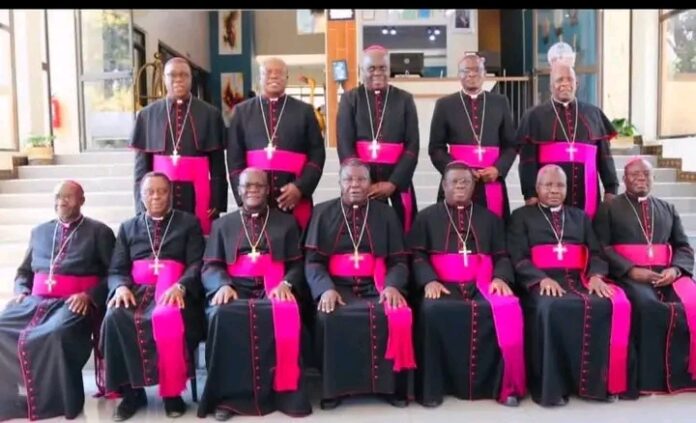
The statement was the government's formal reply to the Zambia Conference of Catholic Bishops, whose pastoral statement earlier on Friday called on President Hakainde Hichilema to state clearly and in public that he will honour the Constitution's two-term limit. The Daily Zambian reported the bishops' statement this morning.
Nkandu said the government recognises and respects the role of the Church in national dialogue, and the right of citizens to express their views and to petition Parliament on matters of public interest. He said the Constitution remains the supreme law of the land and must be respected by all citizens and institutions.
He said the government's focus remains on delivering its development commitments, improving livelihoods, creating opportunities for citizens and advancing the Grow Zambia Agenda.
The President himself spoke on the matter on Friday evening, saying he respects the Constitution and will continue to do so. The Daily Zambian reported his statement on Friday night.
Under Article 106 of the Constitution, a president may serve only two terms. Hichilema began his second and final term on 1 September after winning the 13 August general election with 3,010,542 votes, about 59 per cent of the total, ahead of Brian Mundubile, according to QNC News.
The debate continues in public: marches on both sides of the question are planned for 25 November, and police have banned a protest planned for that day by opponents of any change, QNC News reported. The argument recalls 2001, when a broad civic movement known as the Oasis Forum helped defeat an attempt to amend the Constitution so President Frederick Chiluba could seek a third term.
For now, the government insists the matter is closed — but with the bishops' intervention, the President's own words and the planned marches, the public argument is not over. Whether that insistence settles the question will be tested in the coming days, as church leaders, political voices and demonstrators continue to press their cases in public.